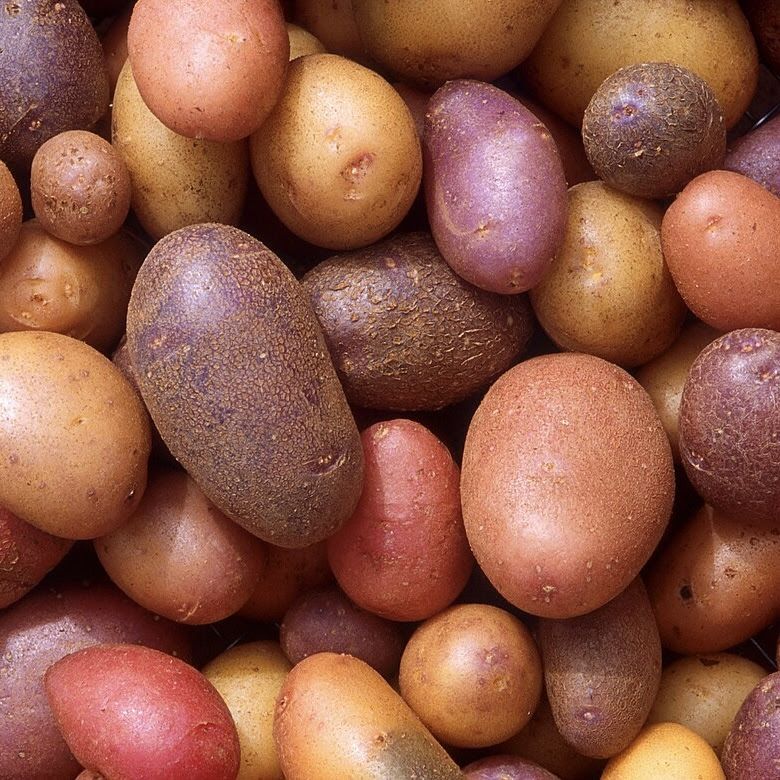
Potatoes are a versatile and widely consumed root vegetable that comes in various types, each with unique characteristics and uses in commercial foodservice. Understanding the differences between types of potatoes is essential for chefs and foodservice operators to create delicious and visually appealing dishes.
Potatoes are categorized by the texture of their flesh, which can indicate the best way to prepare them. These are the three classifications of potato texture:
Starchy Potatoes: Starchy potatoes have a high starch content with dry, mealy flesh. The dry flesh soaks up liquids like a sponge while the interior causes it to crumble and break down easily, making them ideal for mashed potatoes or baked potatoes. Potatoes with a high starch content are also the best candidates for frying into French fries.
Waxy Potatoes: Waxy potatoes contain very little starch and have creamy flesh with a high moisture content. These potatoes usually have thin skin that doesn’t need to be peeled before cooking. Because waxy potatoes hold their shape while cooking, they are ideal for simmering in soups and stews, boiling for potato salads, or baking in casseroles.
All-Purpose Potatoes: All-purpose potatoes contain a medium amount of starch, which gives them a fluffy texture when mashed or baked. They also have a medium water content, which helps them to hold their shape when simmered, roasted, or pan-fried. Choosing an all-purpose potato provides the most options when it comes to different cooking methods and preparation styles.
There are thousands of types of fresh potatoes grown worldwide, but only a fraction are commonly used in foodservice. Some of the most popular types include:
Russet Potatoes: Russet potatoes are large with rough brown skin and pale flesh. They are high in starch and low in moisture, making them ideal for baking, mashing, and frying.
New Potatoes: New potatoes are young potatoes that have been harvested early. They have thin, delicate skin and creamy flesh. Also called baby potatoes, they come in a variety of colors.
Yukon Gold Potatoes: Yukon Gold potatoes have thin gold skin and yellow flesh. They are medium-starch potatoes that are excellent for mashing and roasting.
Kennebec Potatoes: Kennebec potatoes are large, oval-shaped potatoes with thin skin and creamy, firm flesh. They are well-suited for baking, boiling, frying, and mashing.
Red Bliss Potatoes: Red Bliss potatoes have thin red skin and pale flesh. They are waxy potatoes that hold their shape well, making them ideal for boiling, roasting, and in salads.
German Butterball Potatoes: German Butterball potatoes have golden skin and yellow flesh. They are all-purpose potatoes with a rich, buttery flavor.
Red Thumb Potatoes: Red Thumb potatoes are small, oval-shaped potatoes with red skin and white flesh. They are waxy potatoes that are excellent for boiling and roasting.
Russian Banana Potatoes: Russian Banana potatoes are small, fingerling potatoes with yellow skin and waxy flesh. They are ideal for boiling and roasting.
Purple Peruvian Potatoes: Purple Peruvian potatoes have deep purple skin and flesh. They are waxy potatoes that hold their shape well, making them ideal for boiling and roasting.
Japanese Sweet Potatoes: Japanese Sweet Potatoes have reddish-purple skin and white flesh. They are sweet potatoes that are excellent for baking and roasting.
Hannah Sweet Potatoes: Hannah Sweet Potatoes have pale yellow skin and white flesh. They are sweet potatoes that are excellent for baking and roasting.
Jewel Yams: Jewel Yams have copper-colored skin and orange flesh. They are sweet potatoes that are excellent for baking and roasting.
By understanding the characteristics and best uses of each type of potato, chefs and foodservice operators can select the right potato for their dishes, ensuring optimal flavor and texture.
 Can Cook LLC (PestoAI)