In any professional or well-organized home kitchen, food safety and cross-contamination prevention are top priorities. One of the simplest yet most effective tools used to uphold these standards is the color-coded cutting board system. Using different colored cutting boards for different food types helps reduce the risk of foodborne illnesses and keeps the kitchen running efficiently and safely.
Why Cutting Board Color Coding Matters
Cross-contamination occurs when bacteria or allergens are transferred from one food item to another, typically via shared surfaces like knives, countertops, or cutting boards. For example, if raw chicken is cut on a board and then vegetables are prepped on the same board without proper cleaning, harmful bacteria like Salmonella or Campylobacter can spread.
Color-coded cutting boards serve as a visual cue for kitchen staff, making it easy to maintain hygiene standards, especially in busy environments. This system is widely recommended in restaurants, catering services, and commercial kitchens and is increasingly adopted by health-conscious home cooks.
Cutting Board Colors and Their Common Uses
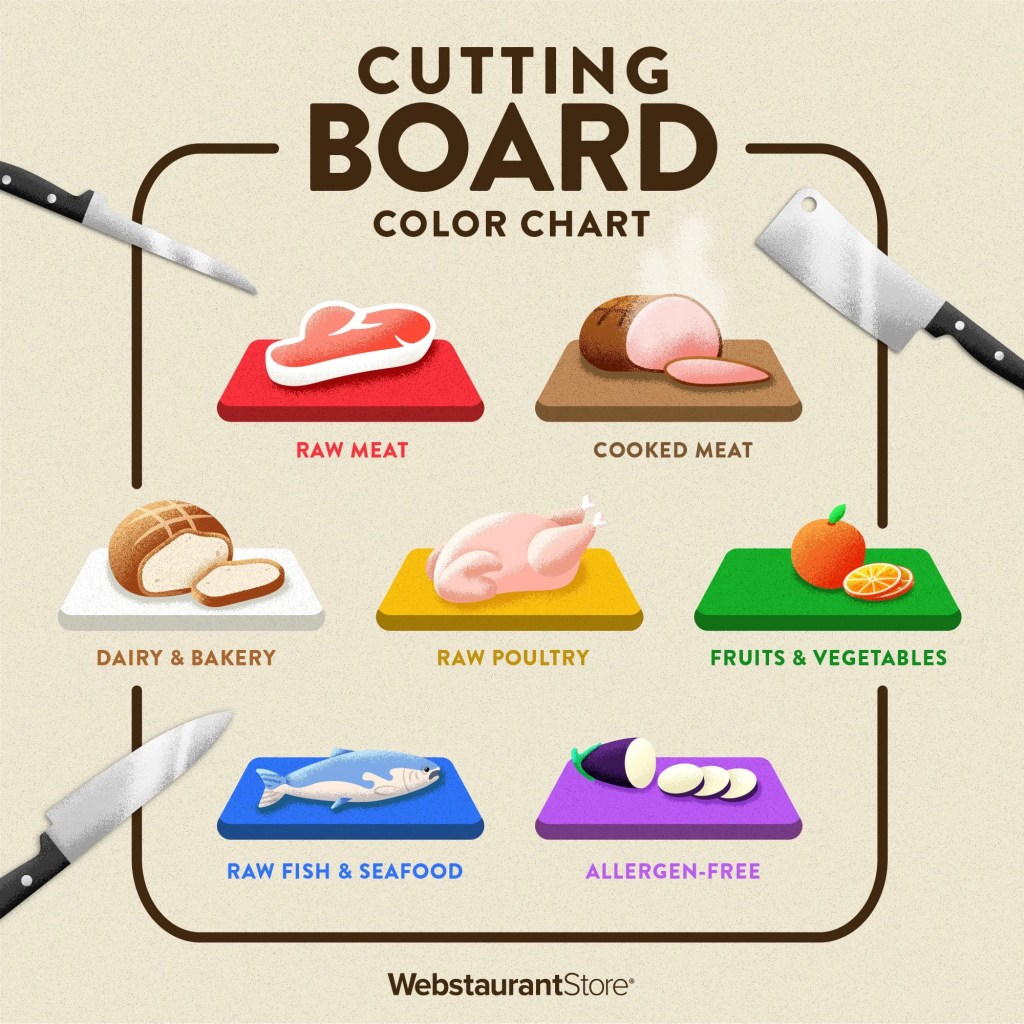
Though color codes may vary slightly between kitchens, the following is the most widely accepted standard based on HACCP (Hazard Analysis and Critical Control Points) guidelines:
 Red
Red
- Raw red meat (beef, lamb, pork)
- Prevents harmful bacteria like E. coli from contaminating other foods.
 Blue
Blue
- Raw fish and seafood
- Avoids cross-contact with meats and allergens specific to seafood.
 Green
Green
- Fruits and vegetables
- Ensures plant-based items aren’t contaminated by animal products.
 Yellow
- Raw poultry (chicken, turkey, duck)
- Keeps bacteria such as Salmonella away from ready-to-eat items.
 Brown/Tan
- Cooked meat
- Separates cooked protein from raw ingredients to prevent recontamination.
 White
White
- Dairy products and bakery items
- Reduces the risk of bacterial growth from meats and helps preserve flavors.
 Purple/Lilac
- Allergen-free foods
- Dedicated to preparing allergen-free meals to avoid severe allergic reactions.
Best Practices When Using Color-Coded Boards
- Label Each Board – Even with color coding, labels or symbols can help avoid confusion, especially in fast-paced kitchens.
- Train Staff Regularly – Ensure everyone knows the system and why it’s important.
- Use Separate Knives and Utensils – Match knife handles or use colored knife systems alongside boards to further reduce risk.
- Clean Thoroughly – Boards should be washed and sanitized after each use, even when used within the same food group.
- Replace Worn Boards – Deep grooves can harbor bacteria. Replace boards when they become heavily scored or discolored.
Bringing Color Coding into the Home Kitchen
For home cooks, adopting a basic version of this system can greatly improve food safety. At a minimum, consider using:
- One board for raw meats (red or yellow)
- One for vegetables and fruits (green)
- One for cooked or ready-to-eat foods (white or brown)
Color-coded sets are widely available and affordable, making this practice an easy upgrade for any kitchen.
Conclusion
Using different colored cutting boards isn’t just a trend—it’s a proven method for maintaining food safety, improving workflow, and reducing the risk of cross-contamination. Whether you’re managing a commercial kitchen or cooking at home, adopting this system can help you stay organized, safe, and compliant with health standards.
Stay sharp, stay safe—color your kitchen smartly!

